The artificial intelligence (AI) bots are mucking up my job search and, I suspect, trying to mess with my head. True story.
Like many these days, I have turned job searching into a primary activity, and the job posting sites have became acutely aware of this. Lists of companies looking for someone like me land in my inbox all the time. And I do mean All.The.Time.
That’s not the problem. The problem is that the specific jobs included in the listings are getting more and more … how shall we say? … outside of my wheelhouse. And by that, I mean sometimes the job post and I are not even on the same boat, nor indeed even on the same planet.
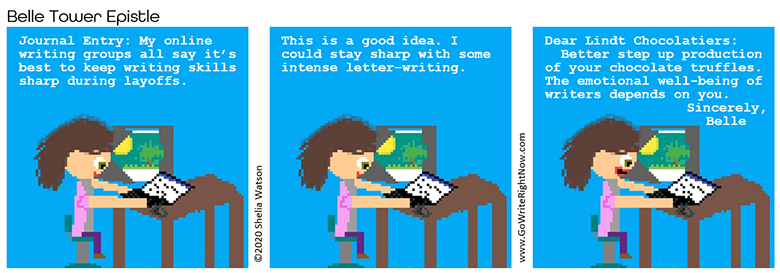
I’m a writer/editor. I work with words. The job market for me is not hard to understand. Content manager, copywriter, copyeditor, technical writer, proposal manager, reporter, grants writer: These are the types of job postings I expect when I open the email.
But not long ago, along with writer/editor jobs I started to get job postings like the following, which I am not making up:
- Home Care Aide
- Paint Shop Manufacturing Engineer
- Border Patrol Agent
- PT Night Trash Collector
- Special Agent with the Federal Bureau of Investigation
- Restaurant Biscuit Maker
- Naval Aviator
Now, these are fine jobs. But trust me when I say there is nothing on my resume that would point to my being qualified for any of them.
Unless Monster, Indeed, Glassdoor, LinkedIn, et.al., were just throwing things out randomly to see what would stick, I figured there had to be a broken algorithm somewhere. I bent thought on how to fix it.
Earlier in my career I did a bit of programming and database work. One thing I learned is that when you’re troubleshooting a database because it has – and please forgive the jargon here – gone all wonky, it helps to start with a simple question:
What does the database think I’m asking it to do?
That often helped me track down the error and fix the code. I tried applying that logic here.
Q: What do these job sites think I’m looking for?
A: Uh…haha…no clue.
And then I gained some insights into this mystery when I came across the new docudrama “The Social Dilemma.” If you haven’t seen it yet, I highly recommend. It’s up on Netflix, which gives this description: “This documentary-drama hybrid explores the dangerous human impact of social networking, with tech experts sounding the alarm on their own creations.”
I found it both eye-opening and chilling. But I also think it explained a lot, especially when I learned just how much the AI bots were tracking my online movements and storing them as data.
Sure, I had an inkling this was going on, what with having a conversation – in the presence of my smart phone or smart TV – that I was thinking about going to Home Depot and then :::BOOM::: a Home Depot ad pops into my Facebook feed within minutes.
That can be a bit unnerving, depending on the details of the conversation and how much of a smarty-pants the smart devices are, but overall, I get it. The closer you target, the more likely you can close a deal, which means you need to gather data so you can zero in and hit the target. Sure, fine.
Except that these AI bots – at least according to this film – are measuring everything: the people I’m friends with, the lists I follow, the videos I watch, how long I stay on a certain site before scrolling to something else, my Google searches. And then they use these bits of data to come to conclusions about me, which might be wildly off-base.
Take the time I spend on a site, for instance. That’s easily explained. If I pause for an unusual amount of time it’s probably because I stumbled across a bizarre political story and I’m shaking my head in disbelief, whispering “What The What…?”
My Google searches, though. This might be where it starts to go off-rail, because connecting those dots would draw a totally different picture.
You see, I write historical novels. These often require some digging, hence the occasional online searches that can be … well, let’s just call them a bit odd.
For example, when I was writing my book “Turning August,” which is set in Germany during World War II, I needed to find out a wide range of details, such as the euthanasia program, how fast one could travel from Munich to Berlin in a 1940s vehicle, images of members of the Resistance movement, and which French cities were bombed first.
For the cover photo shoot, I ordered a vintage 1940s needle/syringe and an authentic Wehrmarcht uniform on eBay. (I worried what my credit card company thought of me and wanted to send them a note of explanation: “Don’t judge me! These are just photo props!”)
My current work-in-progress is set in the Renaissance period. Thanks to Google, I can tell you where Cordoba is located, when Isabella and Ferdinand took over Alhambra, what happened when Columbus sent his brother to talk to Henry VII about funding his trip to the new world, how long it takes to sail from Marseille to the Port of Palos, exactly how fast a peregrine falcon can fly, and the French word for balcony.
Given my overactive online researching, I really shouldn’t wonder that the AI bots are confused about my capabilities and interests. Though I am curious to see what pops up next. Sword-carving apprentice? Lady-in-waiting? Falcon trainer?
After being invited to apply for Border Patrol, FBI Special Agent, and Naval Aviator, I’m up for anything.
Even making biscuits.
~ ~ ~
Update: Moments after I posted this, another email dropped in with new jobs, including this one:
- Firearms Instructor for the Department of Homeland Security
Seriously, bots, you’re starting to worry me.