I Do Declare: Rabbit holes are cozy little places and I want to live there

Back in November, I got a book contract – Yes, you may applaud! I’m excited about it too! – and ever since I signed, I’ve been digging deeper and deeper into the subject matter.

Without going into too much detail (not yet … not while I’m in the research/writing phase), it has to do with historical events, and I am not exaggerating when I say this is the happiest place on Earth for me.

Some of the digging is online, at least for initial information, and everyone knows what a rabbit hole the online search can be. You start in one place and before you know it you’ve hyperlinked over to the other side of the world and a century or two back in time. I love every minute of it.

But an even better rabbit hole to fall down is digging into original sources at places like the historical society and the special sections in the libraries. It’s such a thrill to discover tidbits about a person or a place. Like a sentence in someone’s diary that sheds new light on a famous incident. Or finding a guest list that uncovers connections that weren’t known before.

They’re cozy places, these historical research rabbit holes. And they’re magical. I snuggle down into them, transported to another time, where I can, for a moment, bring people to life again and relive it with them.

Though that’s only half the magic. The other half is coming up out of the hole and seeing present-day with new eyes.

Spend enough time in yesterday, and today will have a sense of timelessness about it. Tomorrow too. As if everything has already happened before, and the contemporary is just a repeat, as the future will be.

Percy Bysshe Shelley, one of the major English Romantic poets, said it far better than I: “History is a cyclic poem written by time upon the memories of man.”

It may sound strange, but that’s actually an encouraging thought. No need to worry about the current state of affairs in the world. Similar – and worse – things happened years ago, and we lived through them. Well, maybe not “we,” but someone did. (Unless you’re doing the research, and then you get to live through it too.)

When I started this project, I thought it was a fabulous writing opportunity. I had no idea the research phase would bring with it such a sense of peace and comfort. What a fabulous discovery. Something I can use to decorate my rabbit hole. I might stay a while.

Right Now: A tale of two projects – or, there are reasons why some things take longer than you think

I recently worked on two similar projects – both journal books about the same size, both self-published (laid out and produced by me), both going up on Kindle/Amazon.

And I was equally excited about working on both.

One is a guided journal for the season of Lent. The other is a morning-and-evening guided journal about gratitude.

Logic says both should have taken about the same amount of time.

They didn’t. I have a few ideas why.

Firm Deadline. The Lent journal had an unmovable deadline of the week before Ash Wednesday. The prayer journal had no deadline. For me, a hard deadline is necessary. If the project has no deadline, I’m more likely to meander my way to completion. In cases where there isn’t an external or calendar-related deadline, I might need to set an agreement with a colleague to finish by a certain time.

Clear Focus. The Lent journal, obviously, is focused on disciplines, study, and introspection. The morning/evening journal went through several iterations because I had to find the precise way to invite the reader into the pages. Taking time to get the words right isn’t a bad thing. It’s just that the Lent journal already had a pre-defined focus, whereas the other journal had more of a blank-page beginning to the project.

Certainty About Audience. In both cases, the audience consists of those who like devotional books, introspective journaling, and writing prompts that lead to contemplation. The difference is that the Lent journal is aimed toward those who are familiar with the church seasons, and the other journal can be useful for a wider audience, including those who have no experience with churches or any religions. The second took longer in part because I wanted to be sure the book was engaging and valuable for the wider audience, which meant getting feedback from several people. Again, not a bad thing, just a different set of factors that determined completion time.

Have you noticed similar comparisons in your own work? Did discovering the differences help with future project planning? Tell me about it in the comments.

I Do Declare: Every Lent, it seems the question is “Where is God in all this?”

My guided journal for Lent is available in Kindle/Amazon (click here). And until Thursday, 2/18, it’s FREE. (If you have Kindle Unlimited, it’s free anyway.)

On any given day, we can find ourselves preoccupied with financial or relational challenges, physical or emotional trials, or vocational or social issues – sometimes several at once. Such concerns can sidetrack us and keep us from enjoying a fulfilling relationship with God and with each other.

Each week in this guided journal, the focus is on a different area where we tend to encounter distractions. The aim is to help you become aware so you can deal with them and turn your attention to God.

This booklet is designed to be a prompt to get you into the Word and into a conversation with God to explore your relationship more deeply.

Only the Bible verse is given (rather than the entire passage) so you can get into the Word yourself and see what God wants to tell you.

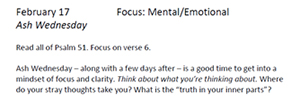
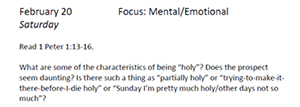
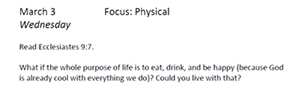
Here are a few sample prompts:

I Do Declare: Snark-watching entertainment is becoming my new favorite hobby

Everything I ever needed to know about snark-watching I learned from Vim & Verve, expert snark-watchers.

Bored from frequent quarantines? Tired of the never-ending job hunt? Inability to gather with friends got you down?

I have a suggestion that might perk you up.

Turn on the TV and start snark-watching. There are no limitations. TV shows, movies, documentaries, commercials – it’s all good. You can even snark-watch the news. In fact, I highly recommend it just to keep from throwing things at your TV in frustration.

And now that awards season is upon us, there’s no better time to take up snark-watching and get really good at it. (At very least, it’s a great skill to have for the pre-show red carpet.)

Snark-watching has become one of my favorite activities. Over the holidays, our household snark-watched the Lord of the Rings trilogy. Three movies back-to-back. The extended version. That’s roughly 14 hours of “That was a stupid thing to say” and “They have to know they’ll end up in trouble going that way” and “Gee, if only there was something like giant eagles in this universe that they could call on to help out.”

It’s best with shows and movies you’ve already seen, so you know what’s coming. It’s more difficult to snark-watch something on a first watch. Unless the production values are that cringe-worthy. Then snarking is to be expected.

Now, here’s something to keep in mind. It doesn’t have to be a TV show or movie you don’t like. In fact, it’s better if it’s something you love. Lord of the Rings is one of my all-time favorites. This makes the snarking even better. Plus, all the snarking won’t stop me from watching it again – with or without snarking during that viewing. That’s the beauty of snark-watching. You can turn it on and off at will. And it’s free.

Pro Tip: It helps to have a mimosa or three when watching. The snarking will get really creative.

Do you participate in snark-watching? Tell me all about it in the comments.

Right Now: If you aren’t sure about your path, check the oil

Battle of olive oil with olive branch in handmade clay plate over wooden table.

If there’s one thing that’ll stop my productivity right in its tracks, it’s second-guessing myself and my current path.

Is this what I should be working on right now? What about all those other things that are important? Am I actually doing what I was called to do? And the most distracting question of all: How do I know? (Along with its sequels: But how do I know that I know? And how do I know that I know that I know? – etc. until the cows come home.)

Those questions used to torture me until I discovered a reassuring way to know with some certainty:

Check the oil.

That probably sounds a bit strange, so I’ll unpack it for you.

When we’re inside God’s will, we’re anointed for the task. In Old Testament times, when people were anointed, the priest would pour oil on their heads, which signified God’s blessing.

Basically, they were oiled up.

So when we’re inside God’s will, we too are oiled up. Anointed.

Now, think of a car and what it means for the car to be oiled up. That means it runs smoothly, the pistons gliding inside the cylinders with ease, moving the vehicle down the road.

When the car has no oil – that is, when it’s not oiled up (“not anointed” for its task) – it’s basically metal against metal. Friction. Overheating. Sometimes complete engine failure.

In terms of knowing whether we’re doing what we’re made to do, here’s the clue: When we’re anointed for the task, even the struggles are easy to handle. When we’re not, even the easy things are a struggle.

The next time the questions swoop in, screeching and shrieking and dropping doubts all around your work, don’t let them bury you under their weight.

Just check the oil.