I Do Declare: The bots are connecting some weird dots on my job searches

The artificial intelligence (AI) bots are mucking up my job search and, I suspect, trying to mess with my head. True story.

Like many these days, I have turned job searching into a primary activity, and the job posting sites have became acutely aware of this. Lists of companies looking for someone like me land in my inbox all the time. And I do mean All.The.Time.

That’s not the problem. The problem is that the specific jobs included in the listings are getting more and more … how shall we say? … outside of my wheelhouse. And by that, I mean sometimes the job post and I are not even on the same boat, nor indeed even on the same planet.

I’m a writer/editor. I work with words. The job market for me is not hard to understand. Content manager, copywriter, copyeditor, technical writer, proposal manager, reporter, grants writer: These are the types of job postings I expect when I open the email.

But not long ago, along with writer/editor jobs I started to get job postings like the following, which I am not making up:

  • Home Care Aide
  • Paint Shop Manufacturing Engineer
  • Border Patrol Agent
  • PT Night Trash Collector
  • Special Agent with the Federal Bureau of Investigation
  • Restaurant Biscuit Maker
  • Naval Aviator

Now, these are fine jobs. But trust me when I say there is nothing on my resume that would point to my being qualified for any of them.

Unless Monster, Indeed, Glassdoor, LinkedIn, et.al., were just throwing things out randomly to see what would stick, I figured there had to be a broken algorithm somewhere. I bent thought on how to fix it.

Earlier in my career I did a bit of programming and database work. One thing I learned is that when you’re troubleshooting a database because it has – and please forgive the jargon here – gone all wonky, it helps to start with a simple question:

What does the database think I’m asking it to do?

That often helped me track down the error and fix the code. I tried applying that logic here.

Q: What do these job sites think I’m looking for?

A: Uh…haha…no clue.

And then I gained some insights into this mystery when I came across the new docudrama “The Social Dilemma.” If you haven’t seen it yet, I highly recommend. It’s up on Netflix, which gives this description: “This documentary-drama hybrid explores the dangerous human impact of social networking, with tech experts sounding the alarm on their own creations.”

I found it both eye-opening and chilling. But I also think it explained a lot, especially when I learned just how much the AI bots were tracking my online movements and storing them as data.

Sure, I had an inkling this was going on, what with having a conversation – in the presence of my smart phone or smart TV – that I was thinking about going to Home Depot and then :::BOOM::: a Home Depot ad pops into my Facebook feed within minutes.

That can be a bit unnerving, depending on the details of the conversation and how much of a smarty-pants the smart devices are, but overall, I get it. The closer you target, the more likely you can close a deal, which means you need to gather data so you can zero in and hit the target. Sure, fine.

Except that these AI bots – at least according to this film – are measuring everything: the people I’m friends with, the lists I follow, the videos I watch, how long I stay on a certain site before scrolling to something else, my Google searches. And then they use these bits of data to come to conclusions about me, which might be wildly off-base.

Take the time I spend on a site, for instance. That’s easily explained. If I pause for an unusual amount of time it’s probably because I stumbled across a bizarre political story and I’m shaking my head in disbelief, whispering “What The What…?”

My Google searches, though. This might be where it starts to go off-rail, because connecting those dots would draw a totally different picture.

You see, I write historical novels. These often require some digging, hence the occasional online searches that can be … well, let’s just call them a bit odd.

For example, when I was writing my book “Turning August,” which is set in Germany during World War II, I needed to find out a wide range of details, such as the euthanasia program, how fast one could travel from Munich to Berlin in a 1940s vehicle, images of members of the Resistance movement, and which French cities were bombed first.

For the cover photo shoot, I ordered a vintage 1940s needle/syringe and an authentic Wehrmarcht uniform on eBay. (I worried what my credit card company thought of me and wanted to send them a note of explanation: “Don’t judge me! These are just photo props!”)

My current work-in-progress is set in the Renaissance period. Thanks to Google, I can tell you where Cordoba is located, when Isabella and Ferdinand took over Alhambra, what happened when Columbus sent his brother to talk to Henry VII about funding his trip to the new world, how long it takes to sail from Marseille to the Port of Palos, exactly how fast a peregrine falcon can fly, and the French word for balcony.

Given my overactive online researching, I really shouldn’t wonder that the AI bots are confused about my capabilities and interests. Though I am curious to see what pops up next. Sword-carving apprentice? Lady-in-waiting? Falcon trainer?

After being invited to apply for Border Patrol, FBI Special Agent, and Naval Aviator, I’m up for anything.

Even making biscuits.

~ ~ ~

Update: Moments after I posted this, another email dropped in with new jobs, including this one:

  • Firearms Instructor for the Department of Homeland Security

Seriously, bots, you’re starting to worry me.
I Do Declare: A good historical work is better than a DeLorean

Did I mention that I love this guy?

I am about to take a trip back in time.

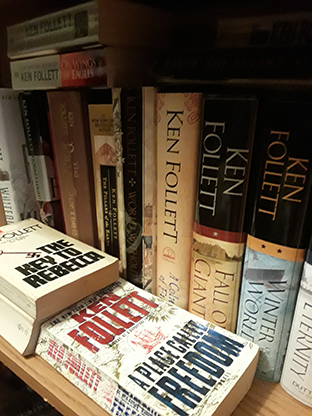
My favorite historical novelist, Ken Follett, has a new book out tomorrow – The Evening and the Morning – and I will be at Barnes & Noble when the doors open so I can purchase it, after which I will be immersed in Medieval England until I turn the last page.

In my opinion, Follett is the perfect storyteller. He has a way of weaving a tapestry of time and place that incorporates all your senses and keeps you on the edge of your seat with anticipation, even if you’re an expert in that period of history and know what’s coming.

I fell under Follett’s spell long ago with The Eye of the Needle, a spy thriller involving a German spy in 1940s England. The book stirred in me a passion for World War II that led (years later) to my writing a historical novel about the German resistance.

Follett also created the world of Kingsbridge and its marvelous cathedral in The Pillars of the Earth and the sequels, World Without End and A Column of Fire, and I was so invested in the stories that I feel like a resident of the town revisiting with each book. His latest book is the prequel to these stories, and I can’t wait to see the origins of “my town.”

There are many other historical novelists who are just as gifted – Herman Wouk immediately comes to mind, as does Anton Myrer (more about both of them in a future post) – but Follett is my favorite.

And it’s not just books. I feel the same about period TV shows and movies that are done well. It’s fascinating how a good historical movie or TV show or book can transform me to a different period and hold me in thrall.

That may sound peculiar, but when it comes to entertainment, in both cinema and literature, I have two great loves: history and time-travel.

Though they’re two sides of the same coin, really.

As much as I love historicals, I adore time travel stories, especially in cinematic form. Whether it’s a fun frolic (Back to the Future – and by that I mean I, II, and III, because they have to be taken as a whole) or a serious narrative (The Final Countdown) or a bizarre travel-industry-turned-dystopia (Thrill Seekers) or a zany yarn (Midnight in Paris) or hundreds of other stories.

TV too. The madcap antics of Quantum Leap or the juvenile capers of Voyagers kept me glued to the set every week.

Does it come as any surprise that the time travel episodes of Star Trek were my favorite? (Apparently I’m not alone. They gathered all those episodes and sold them in one boxed set.)

I don’t even mind the plot holes or conundrums. How did Gil get back to his own time? Why didn’t the time gadget get damaged when Phineas and Jeffrey fell into the next time? Why didn’t Doc and Marty use the undamaged car (which still had gas) that was buried in the cave?

Who cares? If you have people slipping into a different era, I’m there.

I can hand-wave inconsistencies away because it’s all about transporting to another time. Living inside history. Seeing it firsthand.

Which is where I’ll be tomorrow. As soon as Barnes & Noble opens.

I Do Declare: Such trying times call for updated nursery rhymes

Architectural rendering of the house Jack was trying to build provided by E.G. Summers.


On this Labor Day, let’s remember that during the shutdown a lot of people continued to work and, in doing so, kept things a little bit closer to even-keel for all of us.

With that in mind, here’s a 2020 remake of the nursery rhyme “The House that Jack Built”:

~ ~ ~

This is the house Jack was trying to build during Covid.

This is the tech in the County permit office
who processed the forms (while working remote)
for the house Jack was trying to build during Covid.

This is the man from the ISP company,
who repaired the malfunctioning cable lines,
so the tech in the County permit office
could process the forms (while working remote)
for the house Jack was trying to build during Covid.

This is the all-night gas station clerk, who tended the pumps
so the fuel was all set to fill up the truck
for the man from the ISP company,
who repaired the malfunctioning cable lines,
so the tech in the County permit office
could process the forms (while working remote)
for the house Jack was trying to build during Covid.

This is the deli, where brown-bag lunch and dinner were bought by the
all-night gas station clerk, who tended the pumps
so the fuel was all set to fill up the truck
for the man from the ISP company,
who repaired the malfunctioning cable lines,
so the tech in the County permit office
could process the forms (while working remote)
for the house Jack was trying to build during Covid.

This is the cook who burned her hand as she worked at the deli,
where brown-bag lunch and dinner were bought by the
all-night gas station clerk, who tended the pumps
so the fuel was all set to fill up the truck
for the man from the ISP company,
who repaired the malfunctioning cable lines,
so the tech in the County permit office
could process the forms (while working remote)
for the house Jack was trying to build during Covid.

This is the nurse in ER who took care of the cook
who burned her hand as she worked at the deli,
where brown-bag lunch and dinner were bought by the
all-night gas station clerk, who tended the pumps
so the fuel was all set to fill up the truck
for the man from the ISP company,
who repaired the malfunctioning cable lines,
so the tech in the County permit office
could process the forms (while working remote)
for the house Jack was trying to build during Covid.

These are the plans of the house being built
for the nurse in ER who took care of the cook
who burned her hand as she worked at the deli,
where brown-bag lunch and dinner were bought by the
all-night gas station clerk, who tended the pumps
so the fuel was all set to fill up the truck
for the man from the ISP company,
who repaired the malfunctioning cable lines,
so the tech in the County permit office
could process the forms (while working remote)
for the house Jack was trying to build during Covid.

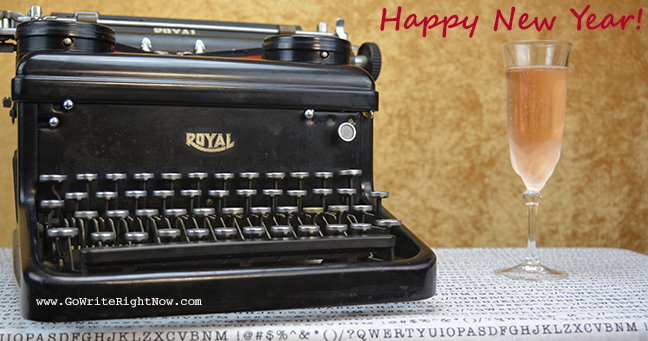
I Do Declare: New Year’s Eve needs to happen more often because I have resolutions to make

I love New Year’s Eve. All that freshness and newness and potential of it all. You get to put away the old year – and won’t we be so happy to do that to this year? – and embrace the new year.

You can throw your arms around the upcoming 12 months and start afresh. The new year is like a big, wrapped box waiting to be opened. It holds a glimmer of excitement, a whisper of something better to come. Possibilities. A shiny new world is tucked inside that word.

Here at the last day of August, this is my New Year’s Eve.

I’ve always felt that September is when the new year happens. School starts. After the lazy meandering of summer, September brings routine and structure. And office supplies! Packs of paper, sticky notes, new notebooks, freshly sharpened pencils, pens in a variety of colors.

It’s a checklist time of year – my idea of heaven – which means things are getting real. Only X number of days until Halloween, until Thanksgiving, until Christmas. No time to waste. To-do lists abound.

So tonight is my New Year’s Eve. Setting resolutions, dining on steak and lobster, popping a bottle of champagne, setting off fireworks at midnight. Just kidding. I won’t go that far. Supper will be the usual fare and fireworks will not be happening (no sense in alarming the neighbors, who might not understand my moving NYE around on the calendar).

But there will be resolutions. And bubbly, probably.

Resolutions are the best part of New Year’s Eve. Intention takes center stage. Resolutions are the great do-over, and for one night at least, you get to feel like a master planner.

Most standard resolutions are about taking better care of yourself or improving yourself in some way:

  • Quit smoking.
  • Eat healthier.
  • Exercise more.
  • Get organized.
  • Save money.

Writer resolutions are different. Sure, we could apply the list above and see some progress and be better people for it, but we writers tend to have a different focus. And a different focus begets different goals.

Here are some resolutions I’ve made in the past. Feel free to adopt for your use.

  • Get organized. By which I mean meet those deadlines – even those that are self-imposed – and remember that you’re on the clock. Yes, it’s your clock, but that doesn’t mean you can fritter away your time. People are waiting to read your work. Getting organized also means avoiding rabbit holes, or at least knowing how to jump back up out of them quickly. When you need to do some research, set a timer. When it dings, close out Google.
  • Feed yourself. Not just your body but your mind. Nourish your thoughts with prose and poetry. If you’re a screenwriter, read as many scripts as you can. If you’re a novelist, dig into books. Read everything you can get your hands on, good or bad. (Yes, the bad too. You need to be able to spot bad writing so you can do better.)
  • Seek peace with your enemies – but make use of the anger. Of course it’s important to let bygones be bygones and forgive those who’ve wronged you. But while you’re working on your peacemaking skills, why not pour all those feelings into your work-in-progress? Give one or more of your characters the same traits as your foes and have at it. Here’s your chance to blast them into next week. (p.s. I’d advise against giving your characters the same names as your real-life foes. You don’t want to spend your future royalties in legal battles over libel.)
  • Use dysfunction to your advantage. Got weird relatives? Of course you do. (Who doesn’t?) Great! You’ve got a ready-made cast of characters. Pull some of that craziness into your work-in-progress. Remember: Normal is  boring. Nobody wants to read about normal. Mentally re-label your family gatherings “Dysfunction Junction” and get on that train. If you’re in therapy, take copious notes. Ask questions like, “What if I didn’t work on these issues? What would that lead to?”
  • Connect with others. Unless you’re collaborating with a cowriter, writing can be a solitary endeavor. It’s important to avert the isolation that comes with it. Get out and about. Do lunch with a friend. At a bare minimum, go walk around a mall or museum or park and be a people-watcher. Observe how they move and what they’re wearing and how they talk. Listen in on their conversations if you can. You need these details for your work.

These resolutions may be a bit on the atypical side, but they’re doable – and you’re more likely to keep at it than a gym membership.

Now I need to set the timer and go look up the words to “Auld Lang Syne.”

Happy New Year!

I Do Declare: The most important question in novel writing is “What if?”

Ever get stuck when you’re in the middle of writing your novel? Or chase the beginning like a merry-go-round you’re not sure how to jump on? Or have entire construction crews go on strike when you’re world-building?

Yeah, same here.

I’ve found the best way to break free of all that and get on with the business of actually writing the book is to pose one basic question:

What if?

Those two words have power. They can unlock a sticky plot or generate nuance or establish the entire universe of your work – if you take time to answer the question honestly.

Example: See this photo of an alley? It looks interesting, maybe a little mysterious. Something about the curve at the end is intriguing.

And then I get started with what if.

What if this alley was built in the late 1700s and there have been stories around town about it being haunted? And what if several people – at least a dozen since 1970 – have disappeared walking down it? And what if a reporter starting investigating the disappearances and experienced a time-slip of his own? What if he ran into a guy who looked like a pirate and at first he thought the guy was dressed up to be in a play but something about him looked different. And what if the reporter saw the guy vanish right in front of him? And then what if he went back to tell his editor about it and the editor killed the story and then the reporter found out that the editor’s first wife was one of those who disappeared?

See? A few what-ifs and I’m already into the story.

It may seem basic (it actually is … that’s the beauty of it), but sometimes the rudimentary tools are what you need to get the work done. This elementary device has several benefits:

  • What if gives your imagination permission to play. Asking what if opens up a range of possibilities, and you can have fun with them. Go along for the ride. Get as serious or as silly as you like. This might be the moment you push your story to the edge – or over it, if that’s where it needs to go.
  • You don’t have to commit to what if. Think of it as a sandbox or a testing ground. You don’t like where your thoughts took you? Ask it again and add other details. See where that takes you. Keep asking until you find a path that feels right. Or discard all of the scenarios and go back to square one. It might look different now.
  • You can ask what if as many times as you like. It’s not a one-time thing. As with my example above, which began as a simple detective story, you can what if yourself into a different (and hopefully richer) story or even into a whole other genre.

Give it a shot next time you’re stuck. Who knows, it might charge up your work. And what if it does? Where to then?

~ ~ ~

By the way, there are many fine writing helps out there (and you can find some of them on my I’m a Fan page, which I add to weekly) that tout effective techniques, solid advice, explanations of rules – including when to break them – and how to get past writer’s block if you’re ever so afflicted. They’re all good resources. I encourage you to use them.

I Do Declare: The clock is a fierce opponent

I get up every morning, don my battle gear, and go to war … with the clock.

The battles I fight, the struggles I face, and the campaigns I map out are all about choosing the best time of day to get things done.

My high energy time is in the morning. That being the case, logic would dictate that I should be doing the most creative things at that time.

But some days logic takes a sharp right turn, and the to-do list elbows its way to the forefront. I tell myself I’ll just get these couple of things out of the way so I can focus the rest of the day on my passion projects.

You know how that ends.

The tasks take up a chunk of time – or worse, they deplete what energy I had, and I’m left running on empty when I do get to the passion projects.

The thing is, those times when I do start the day with one of my passion projects, I don’t want to stop. I get in the middle of it, become mesmerized and focused and just want to be there all day.

That’s no surprise: It’s my passion, it’s a creative endeavor, it feeds me and it gives me more energy. Who doesn’t want to dwell in that place?

And yet, there’s something in the back of my mind that worries that if I get too involved with a creative project right away, it’ll be hard to get to the tasks I have to get done (the routine, the gig assignments, the do-it-or-else tasks, you know what I’m talking about) – or worse, I’ll neglect them or be late completing them, then I’ll have to scramble to catch up.

It’s not just a what-comes-first issue. I battle with squeezing in creative work on the checklist, in between other must-do work. My experience has been that piecemealing creativity is not optimal.

And yet, what if piecemeal is the only way I’ll get everything done?

This war I wage over the clock is ongoing, and moments when I can “stand down” are rare.

Are there any creativity warriors out there who can share their battle stories? I’d like to hear about some campaigns that were won or weaponry that helped turn the tide.

I Do Declare: We need to do something about this month’s lack of holidays

augustcelebrate
You go, August!

Welcome into month number eight of the Craziest Year Ever. When I was casting about for something nice to say about this month that we can all agree is the hottest, most humid, and most conducive to hurricanes (we have one off the coast even as I’m posting this), I realized that August is the only month without an official holiday.

It’s true. You can look it up.

  • January has New Year’s Day and MLK Day.
  • February gets all the love with Valentine’s Day and President’s Day.
  • March goes green with St. Patrick’s Day and a lot of basketball madness.
  • April gives us Spring, Easter, and tax day (except when it’s a crazy year like this one).
  • May is remembered for Mother’s Day and Memorial Day.
  • June celebrates Father’s Day.
  • July waves the Independence Day flag.
  • August – ???
  • September touts Labor Day.
  • October has Columbus Day and Halloween.
  • November revels in the Thanksgiving four-day-weekend.
  • December gives us Christmas and New Year’s Eve.

See? No holidays for August. It’s also one of the months with 31 days, which only adds insult to injury: More workdays without a break. No parties for you, August. It’s like the month is constantly in trouble.

Helpful Wikipedia informs me that August was originally called Sextilis – which might explain why it’s always in trouble … haha, kidding … no seriously, sextilis actually means “sixth” in Latin (back then it was the sixth month) – and then around 700 BC it became the eighth month when January and February were added. (Wouldn’t you like to see the minutes of that meeting? “We don’t seem to have enough months, and that’s messing up my PTO. I move that we add two more and put them at the beginning.” “Second!”)

Years later, Julius Caesar, whose ego required him to name things after himself, created the Julian calendar (see?), added two days to August (a-ha, I bet that’s why they stabbed him!), and renamed it August (again with the ego). Apparently he chose this month as his namesake because that’s when he enjoyed most of his triumphs, including the conquest of Egypt.

Which still doesn’t count as a holiday.

Fortunately, in my quest for something praiseworthy about August, I stumbled across a site (nationaltoday.com), which has quite the list of celebratory moments for each month.  (It’s a fabulous site. Go bookmark it.) One in August is National Just Because Day on August 27, which pretty much sums up the whole month.

Here are some of August’s more interesting festive features. Plan accordingly.

Food and Beverage

  • August 1: National Mustard Day
  • August 2: National Ice Cream Sandwich Day
  • August 3: National Watermelon Day
  • August 7: International Beer Day
  • August 16: National Rum Day
  • August 18: National Fajita Day
  • August 19: National Potato Day
  • August 23: National Sponge Cake Day
  • August 24: National Waffle Day
  • August 28: National Red Wine Day
  • August 31: National Trail Mix Day

Pets

  • August 8: International Cat Day
  • August 10: National Spoil Your Dog Day
  • August 17: National Black Cat Appreciation Day
  • August 26: National Dog Day
  • August 28: National Rainbow Bridge Remembrance Day

General Interest

  • August 1: National Coloring Book Day
  • August 9: National Book Lovers Day
  • August 12: National Middle Child Day
  • August 13: International Left-Handers Day
  • August 16: National Tell A Joke Day


I Do Declare: A musical genius has departed this world

I was saddened to hear news that Ennio Morricone died today.

The man was a brilliant composer, with an amazing 520 credits (per IMDB.com) going back to 1960. He was well recognized for his art: 91 nominations and 83 wins, though only one Oscar among them.

Helpful IMDB Trivia informs me that he refused to move to Hollywood, despite being offered a villa by a studio more than once, and lived his entire life in Italy. He was married to the same woman for 64 years (staying away from Hollywood may have helped in that regard), and they had four children. I’m not sure which of these details is more impressive. His steadfastness is to be admired.

His music always feels so haunting – in a good way. It follows me around, seizing me at the most unexpected times, and eventually settles into my soul. I have no doubt I am more enlightened because of it, a touch closer to God, perhaps.

Morricone once said, “You can’t save a bad movie with a good score.” That’s an insightful commentary on the movie industry, but I like to think of it as a metaphor for life as well – if we think of “the movie” as our words/actions and “the score” as the façades we often display. It’s likely that his comment was meant to be taken at face value – a note about the industry – rather than metaphorically. That’s fine. I present my interpretation as one more example of his ability to burrow into my consciousness.

It’s difficult to choose one favorite out of his vast body of work, but if pressed, I’d have to pick “The Ecstasy of Gold,” from the movie “The Good, The Bad, and the Ugly.”

Here’s the man himself, conducting this magnificent piece of work:

And here’s the version from the soundtrack: