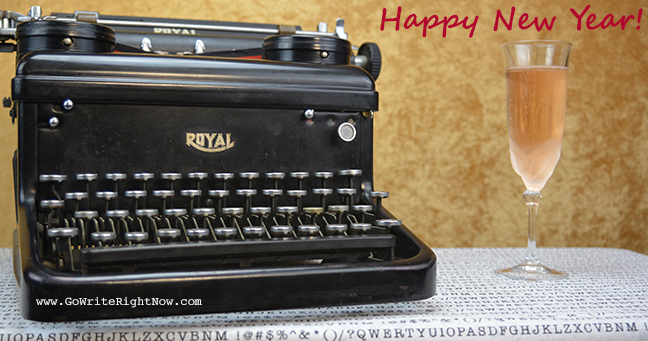
I Do Declare: New Year’s Eve needs to happen more often because I have resolutions to make

I love New Year’s Eve. All that freshness and newness and potential of it all. You get to put away the old year – and won’t we be so happy to do that to this year? – and embrace the new year.

You can throw your arms around the upcoming 12 months and start afresh. The new year is like a big, wrapped box waiting to be opened. It holds a glimmer of excitement, a whisper of something better to come. Possibilities. A shiny new world is tucked inside that word.

Here at the last day of August, this is my New Year’s Eve.

I’ve always felt that September is when the new year happens. School starts. After the lazy meandering of summer, September brings routine and structure. And office supplies! Packs of paper, sticky notes, new notebooks, freshly sharpened pencils, pens in a variety of colors.

It’s a checklist time of year – my idea of heaven – which means things are getting real. Only X number of days until Halloween, until Thanksgiving, until Christmas. No time to waste. To-do lists abound.

So tonight is my New Year’s Eve. Setting resolutions, dining on steak and lobster, popping a bottle of champagne, setting off fireworks at midnight. Just kidding. I won’t go that far. Supper will be the usual fare and fireworks will not be happening (no sense in alarming the neighbors, who might not understand my moving NYE around on the calendar).

But there will be resolutions. And bubbly, probably.

Resolutions are the best part of New Year’s Eve. Intention takes center stage. Resolutions are the great do-over, and for one night at least, you get to feel like a master planner.

Most standard resolutions are about taking better care of yourself or improving yourself in some way:

  • Quit smoking.
  • Eat healthier.
  • Exercise more.
  • Get organized.
  • Save money.

Writer resolutions are different. Sure, we could apply the list above and see some progress and be better people for it, but we writers tend to have a different focus. And a different focus begets different goals.

Here are some resolutions I’ve made in the past. Feel free to adopt for your use.

  • Get organized. By which I mean meet those deadlines – even those that are self-imposed – and remember that you’re on the clock. Yes, it’s your clock, but that doesn’t mean you can fritter away your time. People are waiting to read your work. Getting organized also means avoiding rabbit holes, or at least knowing how to jump back up out of them quickly. When you need to do some research, set a timer. When it dings, close out Google.
  • Feed yourself. Not just your body but your mind. Nourish your thoughts with prose and poetry. If you’re a screenwriter, read as many scripts as you can. If you’re a novelist, dig into books. Read everything you can get your hands on, good or bad. (Yes, the bad too. You need to be able to spot bad writing so you can do better.)
  • Seek peace with your enemies – but make use of the anger. Of course it’s important to let bygones be bygones and forgive those who’ve wronged you. But while you’re working on your peacemaking skills, why not pour all those feelings into your work-in-progress? Give one or more of your characters the same traits as your foes and have at it. Here’s your chance to blast them into next week. (p.s. I’d advise against giving your characters the same names as your real-life foes. You don’t want to spend your future royalties in legal battles over libel.)
  • Use dysfunction to your advantage. Got weird relatives? Of course you do. (Who doesn’t?) Great! You’ve got a ready-made cast of characters. Pull some of that craziness into your work-in-progress. Remember: Normal is  boring. Nobody wants to read about normal. Mentally re-label your family gatherings “Dysfunction Junction” and get on that train. If you’re in therapy, take copious notes. Ask questions like, “What if I didn’t work on these issues? What would that lead to?”
  • Connect with others. Unless you’re collaborating with a cowriter, writing can be a solitary endeavor. It’s important to avert the isolation that comes with it. Get out and about. Do lunch with a friend. At a bare minimum, go walk around a mall or museum or park and be a people-watcher. Observe how they move and what they’re wearing and how they talk. Listen in on their conversations if you can. You need these details for your work.

These resolutions may be a bit on the atypical side, but they’re doable – and you’re more likely to keep at it than a gym membership.

Now I need to set the timer and go look up the words to “Auld Lang Syne.”

Happy New Year!

I Do Declare: The most important question in novel writing is “What if?”

Ever get stuck when you’re in the middle of writing your novel? Or chase the beginning like a merry-go-round you’re not sure how to jump on? Or have entire construction crews go on strike when you’re world-building?

Yeah, same here.

I’ve found the best way to break free of all that and get on with the business of actually writing the book is to pose one basic question:

What if?

Those two words have power. They can unlock a sticky plot or generate nuance or establish the entire universe of your work – if you take time to answer the question honestly.

Example: See this photo of an alley? It looks interesting, maybe a little mysterious. Something about the curve at the end is intriguing.

And then I get started with what if.

What if this alley was built in the late 1700s and there have been stories around town about it being haunted? And what if several people – at least a dozen since 1970 – have disappeared walking down it? And what if a reporter starting investigating the disappearances and experienced a time-slip of his own? What if he ran into a guy who looked like a pirate and at first he thought the guy was dressed up to be in a play but something about him looked different. And what if the reporter saw the guy vanish right in front of him? And then what if he went back to tell his editor about it and the editor killed the story and then the reporter found out that the editor’s first wife was one of those who disappeared?

See? A few what-ifs and I’m already into the story.

It may seem basic (it actually is … that’s the beauty of it), but sometimes the rudimentary tools are what you need to get the work done. This elementary device has several benefits:

  • What if gives your imagination permission to play. Asking what if opens up a range of possibilities, and you can have fun with them. Go along for the ride. Get as serious or as silly as you like. This might be the moment you push your story to the edge – or over it, if that’s where it needs to go.
  • You don’t have to commit to what if. Think of it as a sandbox or a testing ground. You don’t like where your thoughts took you? Ask it again and add other details. See where that takes you. Keep asking until you find a path that feels right. Or discard all of the scenarios and go back to square one. It might look different now.
  • You can ask what if as many times as you like. It’s not a one-time thing. As with my example above, which began as a simple detective story, you can what if yourself into a different (and hopefully richer) story or even into a whole other genre.

Give it a shot next time you’re stuck. Who knows, it might charge up your work. And what if it does? Where to then?

~ ~ ~

By the way, there are many fine writing helps out there (and you can find some of them on my I’m a Fan page, which I add to weekly) that tout effective techniques, solid advice, explanations of rules – including when to break them – and how to get past writer’s block if you’re ever so afflicted. They’re all good resources. I encourage you to use them.

I Do Declare: The clock is a fierce opponent

I get up every morning, don my battle gear, and go to war … with the clock.

The battles I fight, the struggles I face, and the campaigns I map out are all about choosing the best time of day to get things done.

My high energy time is in the morning. That being the case, logic would dictate that I should be doing the most creative things at that time.

But some days logic takes a sharp right turn, and the to-do list elbows its way to the forefront. I tell myself I’ll just get these couple of things out of the way so I can focus the rest of the day on my passion projects.

You know how that ends.

The tasks take up a chunk of time – or worse, they deplete what energy I had, and I’m left running on empty when I do get to the passion projects.

The thing is, those times when I do start the day with one of my passion projects, I don’t want to stop. I get in the middle of it, become mesmerized and focused and just want to be there all day.

That’s no surprise: It’s my passion, it’s a creative endeavor, it feeds me and it gives me more energy. Who doesn’t want to dwell in that place?

And yet, there’s something in the back of my mind that worries that if I get too involved with a creative project right away, it’ll be hard to get to the tasks I have to get done (the routine, the gig assignments, the do-it-or-else tasks, you know what I’m talking about) – or worse, I’ll neglect them or be late completing them, then I’ll have to scramble to catch up.

It’s not just a what-comes-first issue. I battle with squeezing in creative work on the checklist, in between other must-do work. My experience has been that piecemealing creativity is not optimal.

And yet, what if piecemeal is the only way I’ll get everything done?

This war I wage over the clock is ongoing, and moments when I can “stand down” are rare.

Are there any creativity warriors out there who can share their battle stories? I’d like to hear about some campaigns that were won or weaponry that helped turn the tide.

I Do Declare: We need to do something about this month’s lack of holidays

augustcelebrate
You go, August!

Welcome into month number eight of the Craziest Year Ever. When I was casting about for something nice to say about this month that we can all agree is the hottest, most humid, and most conducive to hurricanes (we have one off the coast even as I’m posting this), I realized that August is the only month without an official holiday.

It’s true. You can look it up.

  • January has New Year’s Day and MLK Day.
  • February gets all the love with Valentine’s Day and President’s Day.
  • March goes green with St. Patrick’s Day and a lot of basketball madness.
  • April gives us Spring, Easter, and tax day (except when it’s a crazy year like this one).
  • May is remembered for Mother’s Day and Memorial Day.
  • June celebrates Father’s Day.
  • July waves the Independence Day flag.
  • August – ???
  • September touts Labor Day.
  • October has Columbus Day and Halloween.
  • November revels in the Thanksgiving four-day-weekend.
  • December gives us Christmas and New Year’s Eve.

See? No holidays for August. It’s also one of the months with 31 days, which only adds insult to injury: More workdays without a break. No parties for you, August. It’s like the month is constantly in trouble.

Helpful Wikipedia informs me that August was originally called Sextilis – which might explain why it’s always in trouble … haha, kidding … no seriously, sextilis actually means “sixth” in Latin (back then it was the sixth month) – and then around 700 BC it became the eighth month when January and February were added. (Wouldn’t you like to see the minutes of that meeting? “We don’t seem to have enough months, and that’s messing up my PTO. I move that we add two more and put them at the beginning.” “Second!”)

Years later, Julius Caesar, whose ego required him to name things after himself, created the Julian calendar (see?), added two days to August (a-ha, I bet that’s why they stabbed him!), and renamed it August (again with the ego). Apparently he chose this month as his namesake because that’s when he enjoyed most of his triumphs, including the conquest of Egypt.

Which still doesn’t count as a holiday.

Fortunately, in my quest for something praiseworthy about August, I stumbled across a site (nationaltoday.com), which has quite the list of celebratory moments for each month.  (It’s a fabulous site. Go bookmark it.) One in August is National Just Because Day on August 27, which pretty much sums up the whole month.

Here are some of August’s more interesting festive features. Plan accordingly.

Food and Beverage

  • August 1: National Mustard Day
  • August 2: National Ice Cream Sandwich Day
  • August 3: National Watermelon Day
  • August 7: International Beer Day
  • August 16: National Rum Day
  • August 18: National Fajita Day
  • August 19: National Potato Day
  • August 23: National Sponge Cake Day
  • August 24: National Waffle Day
  • August 28: National Red Wine Day
  • August 31: National Trail Mix Day

Pets

  • August 8: International Cat Day
  • August 10: National Spoil Your Dog Day
  • August 17: National Black Cat Appreciation Day
  • August 26: National Dog Day
  • August 28: National Rainbow Bridge Remembrance Day

General Interest

  • August 1: National Coloring Book Day
  • August 9: National Book Lovers Day
  • August 12: National Middle Child Day
  • August 13: International Left-Handers Day
  • August 16: National Tell A Joke Day


I Do Declare: A musical genius has departed this world

I was saddened to hear news that Ennio Morricone died today.

The man was a brilliant composer, with an amazing 520 credits (per IMDB.com) going back to 1960. He was well recognized for his art: 91 nominations and 83 wins, though only one Oscar among them.

Helpful IMDB Trivia informs me that he refused to move to Hollywood, despite being offered a villa by a studio more than once, and lived his entire life in Italy. He was married to the same woman for 64 years (staying away from Hollywood may have helped in that regard), and they had four children. I’m not sure which of these details is more impressive. His steadfastness is to be admired.

His music always feels so haunting – in a good way. It follows me around, seizing me at the most unexpected times, and eventually settles into my soul. I have no doubt I am more enlightened because of it, a touch closer to God, perhaps.

Morricone once said, “You can’t save a bad movie with a good score.” That’s an insightful commentary on the movie industry, but I like to think of it as a metaphor for life as well – if we think of “the movie” as our words/actions and “the score” as the façades we often display. It’s likely that his comment was meant to be taken at face value – a note about the industry – rather than metaphorically. That’s fine. I present my interpretation as one more example of his ability to burrow into my consciousness.

It’s difficult to choose one favorite out of his vast body of work, but if pressed, I’d have to pick “The Ecstasy of Gold,” from the movie “The Good, The Bad, and the Ugly.”

Here’s the man himself, conducting this magnificent piece of work:

And here’s the version from the soundtrack:

I Do Declare: The year’s half over and this isn’t anything close to what I thought it’d be

I’m an extreme planner. By this I mean I start every day with a checklist, and I slash my way through it like I’m bringing in the harvest. Which is exactly what I’m doing, I suppose.

I have a master plan that includes an overall 5-year view, a more detailed 2-year view (grouped into quarters), a 1-year view (grouped into months), and weekly views (transferred to a separate planner that groups the weeks into daily views).

I call it my roadmap. I update it every year – reviewing the previous year and moving the specifics (e.g., removing the past year, adding the fifth one out) and revising my goals. Things change. Life happens. Plans get adjusted. We move on.

Last December, I put together a tight plan for 2020 incorporating everything I wanted to accomplish. Here’s roughly what it looked like:

  • Various tasks with my day job (goal-setting per corporate mandate)
  • 1 novel (in progress, about 75%) completed
  • 1 screenplay (in progress, about 90%) completed
  • 1 novel (outlined) to rough draft stage
  • 1 series of ebooks (6 books, in rough draft stage) completed and published
  • 2 cruises (one in May, one in October)
  • 1 trip to the Outer Banks (in July)

Besides all that, I brainstormed monthly fun activities with the kids (individually … so we could spend quality time alone together) and put them into envelopes, which they would open on the first day of each month and see what was in store.

2020 was going to be my year. My goals might have seemed a bit aggressive, but I was eager and excited and down for it. I was all: “Come on, 2020, bring it on! I’m ready!”

Needless to say, plans fizzled out rather quickly due to circumstances beyond my control in ways no one had a clue were about to happen.

  • Who knew we’d barely be into the new year before a pandemic would shut everything down?
  • Who knew the shutdown would affect almost every sector of the economy, causing layoffs – and that I’d be hit with the euphemistic RIF (reduction-in-force)?
  • Who knew I’d grow – in a remarkably short period of time – to despise words and phrases like “essential” and “shelter in place” and “we’re all in this together” and “flatten the curve”? (Ok, given my irritation with buzzwords, that didn’t surprise me. But still…)

And yet. AND YET. I refuse to fall into the Pit of Pessimism. Sure, we’re halfway through a crazy year that no one could have foreseen, but I’ll be honest: It hasn’t been a complete loss. I did learn some things. True, most of them I’d already known. But it took the extreme nature of this year to remind me and to hammer the lesson home. Which isn’t bad.

Things like:

  • Flexibility might be a better attribute than ability. So you get knocked down. That happens to everyone at various times. What’s important is how quickly you can get back up. Learn that life skill and apply it.
  • Being debt-free is probably the most sane and mature goal of all. I am channeling my inner Dave Ramsey here. If things get wacky all of a sudden (like … you know … the way they did …?), it’s so much easier to deal with if you don’t have a ton of debt that required your day job to stay even-keel.
  • I might say I need peace and quiet to work effectively, but that might not be true. Being without human contact for a long period of time has made me appreciate small moments of connection. I will never again take that for granted.
  • Making plans, even if they get disrupted in the zaniest way possible, is still a worthy endeavor. Just because I couldn’t rock the heck of out 2020 with my bullet list doesn’t mean the list wasn’t fabulous. I will simply have to stretch the goal line out a bit. It’s all good.

I expect that my review this December will be quite the introspective journey. And I can’t say I won’t be glad to see this year move on into the history books. It’s my hope that when I make my aggressive plans for 2021, I’ll do it with a measure of the wisdom I acquired this year.

At least that’s the thought that might get me through the rest of this year.