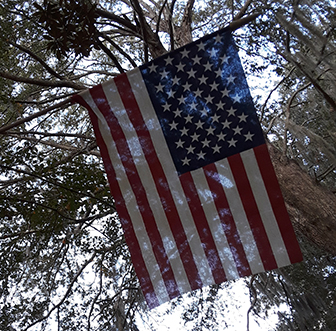
I Do Declare: Election hostility is a matter of “it has always been thus”

You would think this year’s election was the most contentious, most divisive, most acrimonious of any election.

You would be wrong.

I did a little digging and found out that, when it comes to elections, rancor and spite is the order of the day.

To give you a bit of perspective – and hopefully help you regain your equilibrium – here are a few samples of previous U.S. presidential elections:

  • The 1800 presidential campaign between Thomas Jefferson and John Adams got heated up quickly. When Adams called Jefferson “a mean-spirited, low-lived fellow,” Jefferson retaliated by hiring a sleazy journalist names James Callender to smear John Adams in the press. Callender wrote that Adams had a “hideous hermaphroditical character” and spread the false story that Adams wanted to start a war with France. Jefferson ended up winning. Adams left before Jefferson’s inauguration. Though the two eventually patched things up (and wrote inspiring letters to one another), they wouldn’t speak to each other for 12 years.
  • George Washington spent his entire campaign budget on booze. True story. In 1758, when he was running for the Virginia House of Burgesses (the first legislative assembly of elected representatives in North America), he bought 160 gallons of liquor to serve to voters on election day. (Some say this wasn’t his fault. Apparently the custom of buying votes with booze was an English tradition brought over to the colonies.) Later, when he was running for his second term, Washington declared that someone running for president should not be too eager to seek it. Despite his earlier booze-vote-buying, he declared that campaigning was vulgar and undignified and that “the office should seek the man” rather than the other way round.
  • Now and then, one party will accuse the other of pulling voters from death records. The election of 1872 went one better when incumbent Ulysses S. Grant ran against a corpse. Grant’s opponent, Horace Greeley, died before the election was finalized. Grant won anyway, so there wasn’t as much controversy as there might have been had Greeley won. And because he cast it when he was still alive, Greeley’s vote did count.
  • When incumbent John Quincy Adams was challenged by Andrew Jackson in the 1828 election, the campaigning got personal. Jackson accused Quincy Adams of being a pimp for the Russian czar while serving as American ambassador. Quincy Adams in turn called Jackson’s wife a slut and his mother a prostitute. Jackson ended up winning, but he refused to pay the customary visit to the outgoing presidential when he came to Washington, and Quincy Adams refused to attend Jackson’s inauguration.
  • The election of 1892 was the first time a voting machine was used. It was actually invented years earlier, but candidates resisted using it because it precluded their ability to gain votes through wheeling and dealing.

Fanthology 11.4.2020

No, we don’t have a clear winner in the presidential election yet this morning, but work keeps going and so does the weekly search for interesting and informative stories to help writers. Check out these that I came across this week:

After the nail-biter election results of last night – and with no clear winner at the moment, I thought it best to start with a story from Good News Network about a farm where children with special needs connect with injured animals to form healing friendships. It’s stories like these that make me feel like we’re going to be okay.

Steven Pressfield talks about getting to true identity in his blog post, alone in a room wearing a mask. All of Pressfield’s posts are fabulous. I recommend following him.

Over at Writer’s Digest, editor/screenwriter Jeanne Veillette Bowerman shares some valuable tips on saving money on your screenwriting career. Jeanne’s another must-read that I highly recommend.

Derek Haines at Just Publishing Advice details how to write a blog post to attract more readers. I’m going to bookmark this one and follow the advice!

Also at Just Publishing Advice, Haines makes the case for using strong verbs to add punch to your writing.

Fanthology 10.28.2020

Check out these cool bits and pieces I came across this week:

Writer Katie Buller has put together a complete treasure trove of tools for authors that is so comprehensive it’s in two parts: part 1 here and part 2 here.

Writers Helping Writers outlines 4 ways to fix a boring story.

Over at Scriptmag, writer William C. Martell gives us the goods on invisible plants and payoffs. The article is specifically for the screenwriter audience, but the advice is good for novels as well.

For those of you who are putting together your samples, be sure to check out the advice from writer Noemi Tasarra-Twigg at Freelance Writing Gigs on the portfolio mistakes you want to avoid.

Here’s one just for fun: From the same folks who gave us the uproarious It’s a Southern Thing YouTube channel, Bless Your Rank includes several hilarious videos of food and beverage rankings.

I Do Declare: Hurricane season is milking 2020 for all its worth

Earlier in the archives, I introduced you to Mike and his spaghetti models, and it looks like we need to get reacquainted because, I kid you not, there’s another hurricane in the works.

This one is named Zeta – we’re into the Greek because we ran out of English names – and at first I was really worried because I thought we were at the end of the Greek alphabet too. (Turns out Zeta is only the sixth letter, but still!)

(c) NOAA. Screen grab from Mike’s page.

Hurricane Z is in the Gulf (as of Monday morning) and will be blasting by my home, the great state of South Carolina, on the back side later this week.

And that’s just not right. Not when Halloween is days away.

Yes, it’s true that hurricane season lasts through the end of November, but let’s be honest: We consider this a technicality and don’t expect to be picking up storm debris along with the ghost and goblins displays in the front yard.

On the other hand, we’re still in 2020, and if this year has taught us anything, it’s that we should not let down our guard until the ball drops at 11:59 p.m. on December 31.

In the meantime, I recommend that you bookmark Mike’s page and follow him on Facebook (as Mike’s Weather Page) and on Twitter (as @tropicalupdate). He has up-to-the-minute info on everything weather related. Consider donating (PayPal and Patreon links on the left column) if you can, because he’s an enormous help and deserves our support.

===

Unrelated, but still interesting, note:

Grammarcat insisted that I mention the headline is correct with “its” (the possessive form) rather than “it’s (contraction of “it is”). I had an internal debate on this and finally located a site that spelled out the differences and spent some quality time there. This, of course, is what we grammar nerds do for fun and is also why God invented the internet.

Fanthology 10.21.2020

A few interesting stories I came across this week:

On the Create Write Now site, writer Joy Held encourages writer wellness and challenges with five things for your writing.

At IngramSpark, writer Scott La Counte explains how to promote a book on social media.

Derek Hanes at Just Publishing Advice discusses using a free starter series to sell more books.

BBC News has a life-imitates-myth story where an eight-year-old girl pulls a 1,500-year-old sword from a lake in Sweden.

Continuing with the “children leading us” theme, Good News Network has what we hope will be good news indeed: 14-year-old girl wins $25k for a scientific breakthrough that could lead to a Covid-19 cure.