
Advice from Writer Girl

Unless you’re collaborating on a project, writing can be quite the solitary endeavor. Even if you appreciate – or even crave – the solitude, it’s a good thing to connect to others who understand the writing life and all its weirdness.
Here are some links where you might find your peeps:
I’m an extreme planner. By this I mean I start every day with a checklist, and I slash my way through it like I’m bringing in the harvest. Which is exactly what I’m doing, I suppose.
I have a master plan that includes an overall 5-year view, a more detailed 2-year view (grouped into quarters), a 1-year view (grouped into months), and weekly views (transferred to a separate planner that groups the weeks into daily views).
I call it my roadmap. I update it every year – reviewing the previous year and moving the specifics (e.g., removing the past year, adding the fifth one out) and revising my goals. Things change. Life happens. Plans get adjusted. We move on.
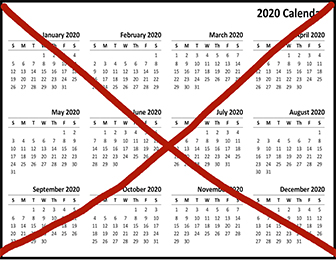
Last December, I put together a tight plan for 2020 incorporating everything I wanted to accomplish. Here’s roughly what it looked like:
Besides all that, I brainstormed monthly fun activities with the kids (individually … so we could spend quality time alone together) and put them into envelopes, which they would open on the first day of each month and see what was in store.
2020 was going to be my year. My goals might have seemed a bit aggressive, but I was eager and excited and down for it. I was all: “Come on, 2020, bring it on! I’m ready!”
Needless to say, plans fizzled out rather quickly due to circumstances beyond my control in ways no one had a clue were about to happen.
And yet. AND YET. I refuse to fall into the Pit of Pessimism. Sure, we’re halfway through a crazy year that no one could have foreseen, but I’ll be honest: It hasn’t been a complete loss. I did learn some things. True, most of them I’d already known. But it took the extreme nature of this year to remind me and to hammer the lesson home. Which isn’t bad.
Things like:
I expect that my review this December will be quite the introspective journey. And I can’t say I won’t be glad to see this year move on into the history books. It’s my hope that when I make my aggressive plans for 2021, I’ll do it with a measure of the wisdom I acquired this year.
At least that’s the thought that might get me through the rest of this year.


Doing some research on your work-in-progress? Check out the Library of Congress Research and Reference Services. You’ll want to bookmark it so you can spend quality time there.
I found it to be one of the most pleasant rabbit holes I’d ever gone down.
If you’re not familiar, I recommend starting at the Quick Links (on the far right column) with the Getting Started and Frequently Asked Questions pages.
Also bookmark-worthy:


How I get things done would make an interesting study … mainly in how to be a control freak.
I live by to-do lists. A clock sits next to my computer screen so I know what time it is every second. I have a calendar habit that few understand: wall calendars, day planner inserts, daily Sudoku, word of the day, 3-month, huge write-on … you name it, I have it, including some I produce in Word because I haven’t found that particular style yet.
All of this is so I can better manage my time so I can be more productive. Yes, there are benefits to slowing down, smelling the roses (or your flower of choice … actually, mine is the hyacinth), meditating, long walks in the park, whatever. I concede that point.
But for me, what works is dividing my time, listing what I need to do, and pushing myself to that accomplish it. And when I do … bring on the rewards!
 I’m always on the hunt for better time management tools, and I found one in a book by Rachel Aaron called “2,000 to 10,000: How to write faster, writer better, and write more of what you love.” Check out her blog post (and link to purchase her book) on the subject.
The basic premise is the triangle of writing metrics: Knowledge (know what you’re writing before you write it), Time (track productivity and evaluate), and Enthusiasm (get excited about what you’re writing).
I love the way she breaks down this concept, especially the need to track productivity and evaluate it. I’ve always called myself an early riser, more productive in the mornings. But am I sure about that? I haven’t taken the time to track when and how much I’m writing, so it’s possible that I get more done in the afternoon or evening. I’ll be doing that over the next few weeks.
Getting excited about what I’m writing is something else I need to ponder. She describes on her blog and in her book how she spent days stuck in one scene. (I know the feeling.) She said she realized that it was because the scene wasn’t interesting enough to her. The solution? Make it more interesting … or cut it. Think about it: If you’re not really into the scene, will the reader be?
The Knowledge leg of the triangle I think I already have a handle on. A huge part of my writing life is organizing and outlining, so I’m almost always aware of where the story’s going today.
I definitely think this method will work with novel writing, but I’m also revising it slightly for screenplays. With screenplays, word count isn’t what I’m after – it’s pages completed. So here’s the plan: a typical screenplay has roughly 100 pages. If I write five pages per day, I can finish a rough draft in 20 days. Time spent revising, editing, and polishing is another matter. But getting the rough draft done – or as a wise man once said, “Get the damn thing done!” – will be an accomplishment worthy of reward.

